After the first real storm of the winter, we hear from owners in La Puente who have found water near the fireplace and assume the chimney pipe is leaking. On a house with a factory-built fireplace, the pipe is rarely the culprit. The water almost always gets into the wood-framed box around the pipe, the chase, and finds its way down from there. This post explains where it gets in, how we track it down, and what the repair costs.
A chase is a small building of its own
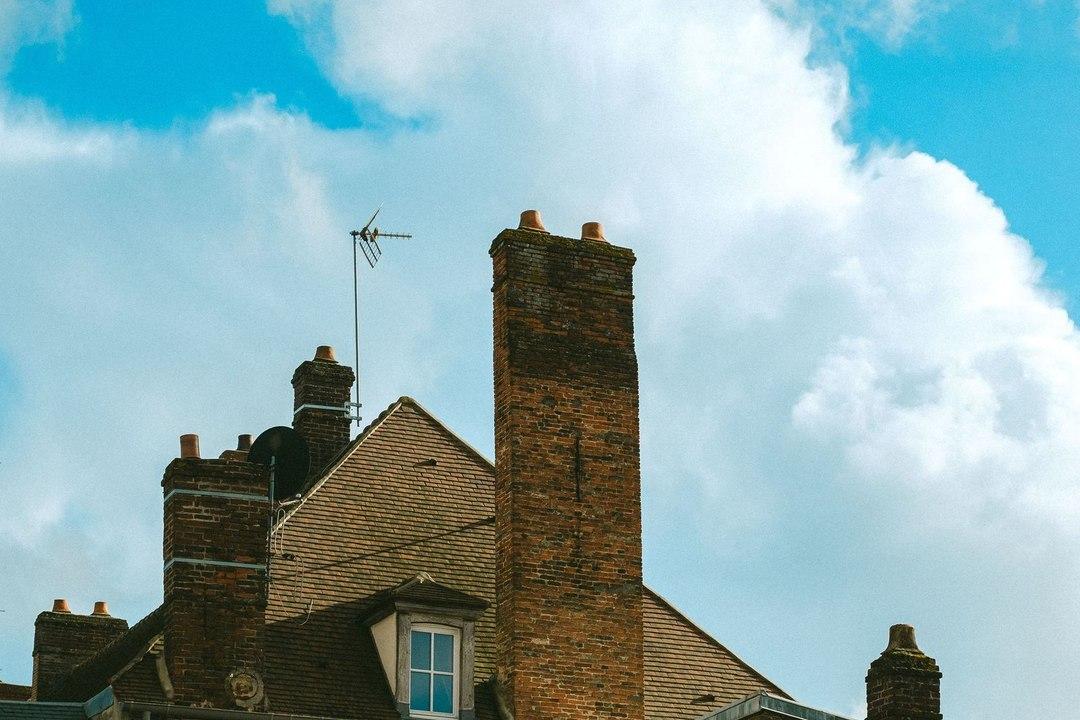
A chase is a box framed in lumber, sheathed, and finished in stucco or siding, sitting on or beside the roof. It has a metal top, walls, corners, a joint with the roof, and a pipe running up the middle. Every one of those is a place water can enter, and because the inside is hollow, water that gets in can run a long way before it shows.
That is why the stain you see is often not under the leak. Water can enter at the top of the chase, run down the inside of a stud, and appear on the ceiling a few feet from the fireplace wall, or on the top of the firebox as rust.
The usual ways in
These are the sources we find most often on chase-style chimneys around La Puente, roughly in the order we see them:
- The chase cover. A rusted, dished or loose top, or a failed seal around the pipe collar. Our post on chase covers goes into it.
- The storm collar. The ring that seals the pipe to the cover. When its sealant dries out, water runs straight down the outside of the pipe.
- A missing or damaged cap. Without the listed cap, rain falls into the pipe itself, and its insulated space can soak.
- Stucco cracks on the chase walls. Fine cracks let wind-driven rain into the sheathing behind.
- Flashing at the roof. Where the chase meets the shingles or tile, metal flashing should carry water around it. Lifted, rusted or badly sealed flashing is a common source on wide chases.
- The uphill side. On a wide chase that sits across the slope, water and debris pile up behind it. A diverter, called a cricket, splits that flow and sends it around.
How we trace a leak
Guessing is expensive, so we look before we price. We go onto the roof and check the cover, collar, cap, stucco and flashing, then go into the attic and follow the stains on the framing back toward the highest wet point. Inside the house we look at where the marks are and how they spread.
When the source is still unclear, we wet the chase in sections with a hose, starting low and working up, while someone inside watches the firebox and the ceiling for the first sign of water. Starting low means a drip that appears points to the section just wetted, not to everything above it.
Every source we find goes in the report with a photo and its place on the chase, because a leak often has more than one.
What the repair costs
On this site, tracing and fixing a chimney leak runs $590 to $3,550. The bottom of that range is a single clear source, like a dried-out storm collar or one lifted flashing corner. The upper end is for water fed from several places at once, or leaks that have soaked framing that needs replacing.
Two related jobs carry their own published ranges:
- A cricket on the uphill side of a wide chase runs $475 to $1,065.
- That diverter fitted at the same time as a complete set of fresh flashing runs $710 to $1,750.
A chimney cap, if the old one is missing or rusted, is quoted after we measure. A new chase cover and stucco work have no fixed figure here; the written quote covers them once the chase is measured.
What decides your price
The number in your written quote follows a few things:
1. How many separate sources the tracing finds. 2. Whether the water reached the framing or the firebox, and how much is wet or rotten. 3. Whether the chase cover and cap can stay or need replacing. 4. Roof type and pitch. Tile takes more care than shingle, and steep roofs take longer. 5. Whether a cricket is needed behind a wide chase.
If you have water near the fireplace after rain, describe where the stain is and when it appears in the quote form, and note whether the chimney box on your roof is stucco or siding. We reply with a visit to trace it and a written price for the repair.
Why the fix order matters
We fix from the top down. A new cover over wet framing traps the moisture, and new flashing on a chase with a rusted top does nothing for the water coming in above it. So the cover and cap come first, then the walls, then the flashing and cricket, and only then any interior repair.
Once the chase is sealed, some owners also want the stucco on the chase treated with a breathable repellent. Our chimney waterproofing page explains when that is useful and when it is not.
Do not wait for the next storm
Winter rain in the San Gabriel Valley tends to come in bunches, and a chase that leaked once will leak in the next one. Water inside a chase also reaches the top of the steel firebox and starts rust where you cannot see it. If you have seen a stain, the sooner it is traced, the smaller the repair tends to be.
Getting a leak traced in La Puente
We trace and repair chase leaks in La Puente, West Covina, Covina, Diamond Bar and the nearby towns, and our leak repair page shows what the visit includes. Reach us through the contact page and tell us where the water appeared and after which storm.
Want a Look at Your Own Unit?
Hurley Chimney Works works from La Puente across West Covina, Covina, Diamond Bar and nearby cities. We read the label, check the parts against the listing and leave photos with a price for each repair.